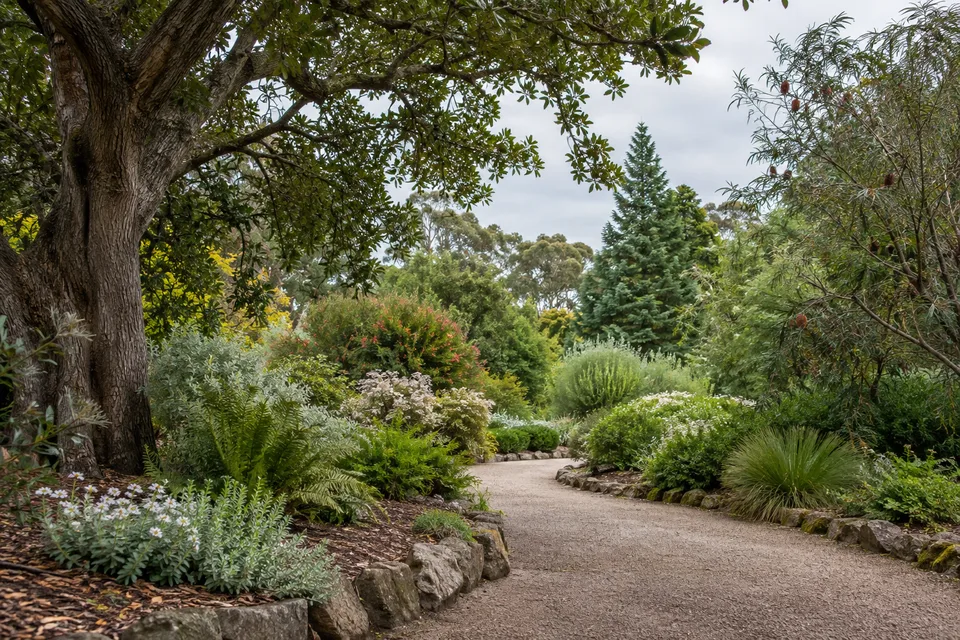
The Royal Tasmanian Botanical Gardens gives a Hobart day a different tempo. On Lower Domain Road in Queens Domain, the 14-hectare site brings Tasmanian native flora, heritage trees and garden history into a walkable setting a short distance from the city centre. It works particularly well when a visitor wants time outdoors without committing to a long mountain excursion or a fixed itinerary. Start with the map and allow the collections, rather than a checklist, to decide the route.
Begin with the living collections
The Gardens describe an opportunity to experience Tasmania’s distinctive native flora in one site. That is a useful reason to slow down around the planted collections, read the interpretation and notice how the different spaces relate to one another. The Subantarctic Plant House is a distinctive part of the visit, but the Gardens also point to heritage trees and a site linked to the island’s earliest colonial kitchen garden. Treat those elements as complementary rather than trying to see them all at speed.
Make room for history and Country
The site’s historic buildings and structures are part of its heritage offer, adding another layer to a visit that might otherwise be framed only as a garden walk. The Gardens acknowledge the Muwinina people as the traditional owners and custodians of the land, and pay respect to Tasmanian Aboriginal Communities. That acknowledgement belongs in the way the place is approached: use the institution’s own interpretation, avoid treating cultural context as decoration, and follow any visitor guidance provided on the day.
Choose a pace that suits the day
The official visitor page lists free entry and daily opening from 8am to 5pm. Its map, accessible information and current notices should shape an actual plan, particularly because visitor works or individual facilities can affect a route. The Gardens currently note Northern Roadway works and a Conservatory closure for restoration, which is a reminder to check the official page shortly before travelling rather than relying on an older guide. Volunteer-led tours are also listed; confirm their current arrangements if a guided visit matters.
Use it as an intentional pause
A good visit might be a quiet hour between waterfront and city activities, or a longer pause with time for the grounds and the on-site food and retail options. The restaurant, kiosk and Botanical Shop have their own listed hours, so do not treat them as guaranteed simply because the grounds are open. Bring layers and water as the day requires, use the visitor map to avoid unnecessary backtracking, and leave space to linger where a collection or tree catches your attention.
Sources
Sources last validated: 14 September 2026.